BEBPA Blog
Tech Briefing: It all happens in Bioassay Development: Regulatory Expectations, Scientific Rationale, Artificial Intelligence and Technology
By Laureen Little, Principal Consultant, Quality Services and President (BEBPA)
Artificial intelligence and automation are popular across many different industries including potency assay development. After all why should we, development scientists, do manual work ourselves if we can delegate it to a machine and get better, faster results.
Potency bioassays are not leading the adoption of these technologies. Our main goal is to ensure our potency assays have a solid scientific basis. We assess whether a proposed analytical method truly reflects the critical mechanism of action (MoA). Stated simply, we determine if bioassay readouts change appropriately when the active ingredient’s structure alters and it loses its key biological function.
From the outset of potency assay development, companies aim to understand the mechanisms of action (MoA) of their products. Although this may appear straightforward, it is often complex for new and innovative biopharmaceutical products. Dr. Gaurav Agrawal will be presenting on this topic, focusing on emerging obesity therapeutics.
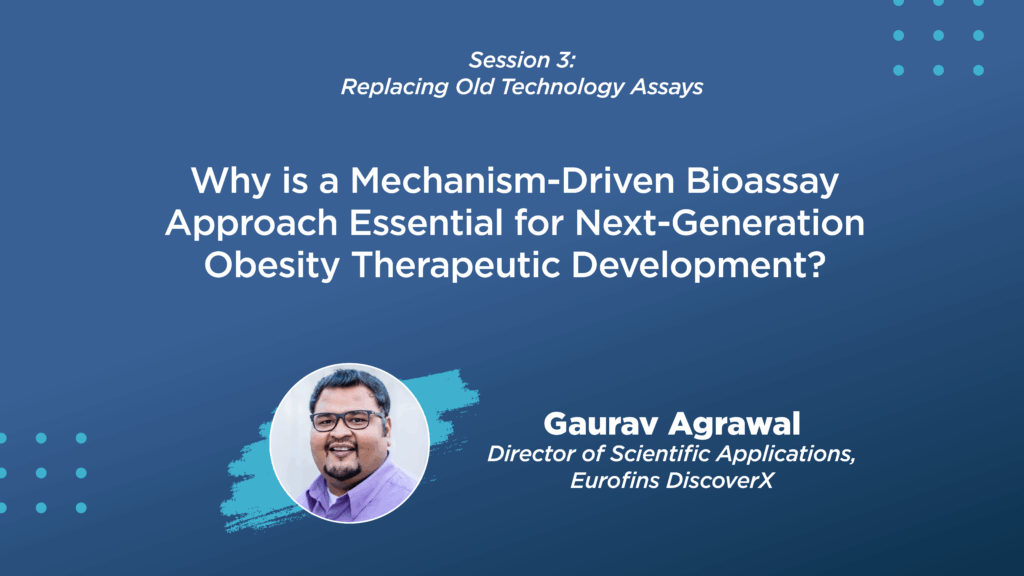
These drugs frequently demonstrate complex MoAs, such as signaling bias and multi-receptor targeting. For those working with products that have multiple or unknown mechanisms of action, or contain numerous potential active ingredients (such as cell or proteome therapies), this presentation provides relevant information.
After establishing the scientific rationale for your potency assay (or assays), assay development begins. Typically, this involves conducting experiments to choose suitable assay reagents, identify a reliable and selective readout, and optimize the dose-response curve’s key properties.
Expertise in the MoA and available platforms is essential, but once initial decisions are made, optimizing methods becomes the focus. Potency scientists often use Design of Experiments (DOE). Thanks to the access of commercial software designing DOE and the increasing number of statisticians in the bioassay field great strides have been made in the use of DOE and has resulted in the acceleration of development timelines.
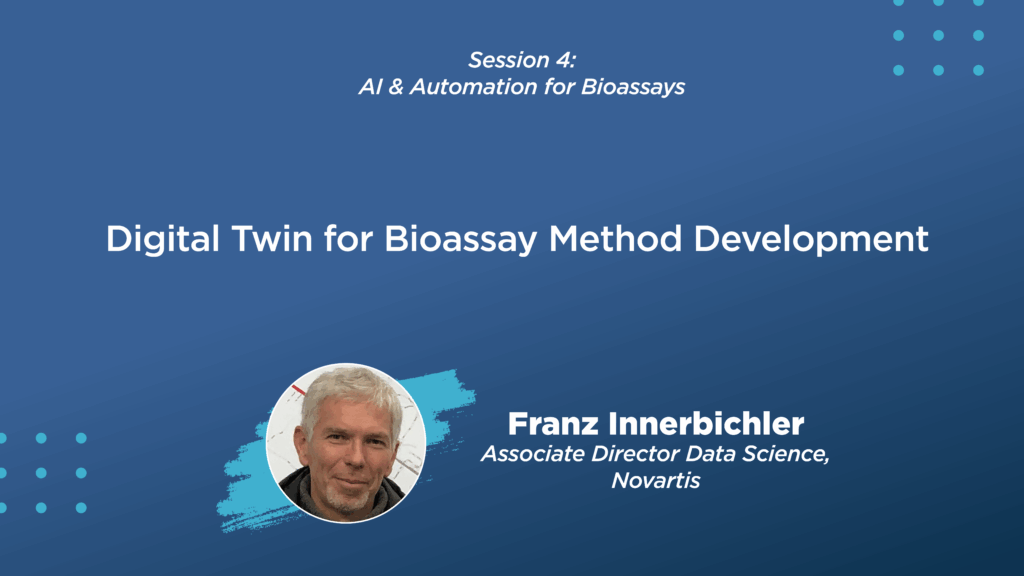
Another up and coming tool for assay optimization is the use of computer modeling of various types of dose-response curves to guide assay design and set system suitability targets to ensure accurate potency determination. Dr. Franz Innerbichler, Associate Director of Data Science at Novartis, will discuss implementing these proactive strategies.
The automation of an analytical method is frequently the final step in method development. It is typically carried out by the QC group, which often handles a significant increase in assay requests due to ongoing stability studies, reference material testing, and routine product release. In these instances, the cost and efficiency of automation can be readily calculated.
Automation can also be implemented earlier in the development cycle. This approach may support the development team with MFAT analyses and facilitate the use of platform technologies across multiple products. Automation may improve consistency and scalability. Additionally, integrating automation during development can streamline the adoption of automated methods later, reducing the need for extensive studies that are otherwise required when transitioning from manual to automated methods for commercially approved products. There are several practical considerations, including the time required to establish automated protocols, instrument costs, and additional analyst training which make companies hesitate to implement automation during development.
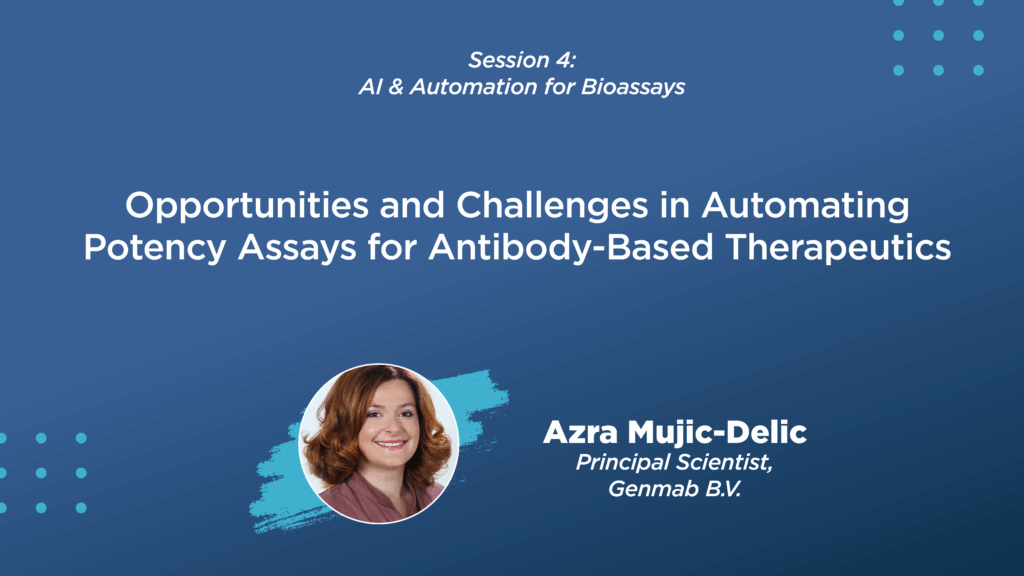
At this year’s BEBPA European Bioassay Conference, Dr. Azra Mujic-Delic, Principal Scientist at Genmab, will discuss the opportunities and challenges associated with implementing automation at various stages in the development of potency bioassays for their products.
Bioassay development is evolving rapidly with innovative contributions from scientists, statisticians, and technologists. Navigating science, AI, regulatory requirements, and automation is critical for developing commercially approved potency assays. Mastering current statistical methods and technological advances is key to achieving state-of-the-art results. These topics will be covered at the upcoming BEBPA European Bioassay Conference in Rotterdam, 24–26 September 2025. Registration is filling quickly—sign up soon.